
Do I Have to Pay the Cleanup Bill?
Hazardous-Waste and Fuel Cleanup After a Motor-Vehicle Accident
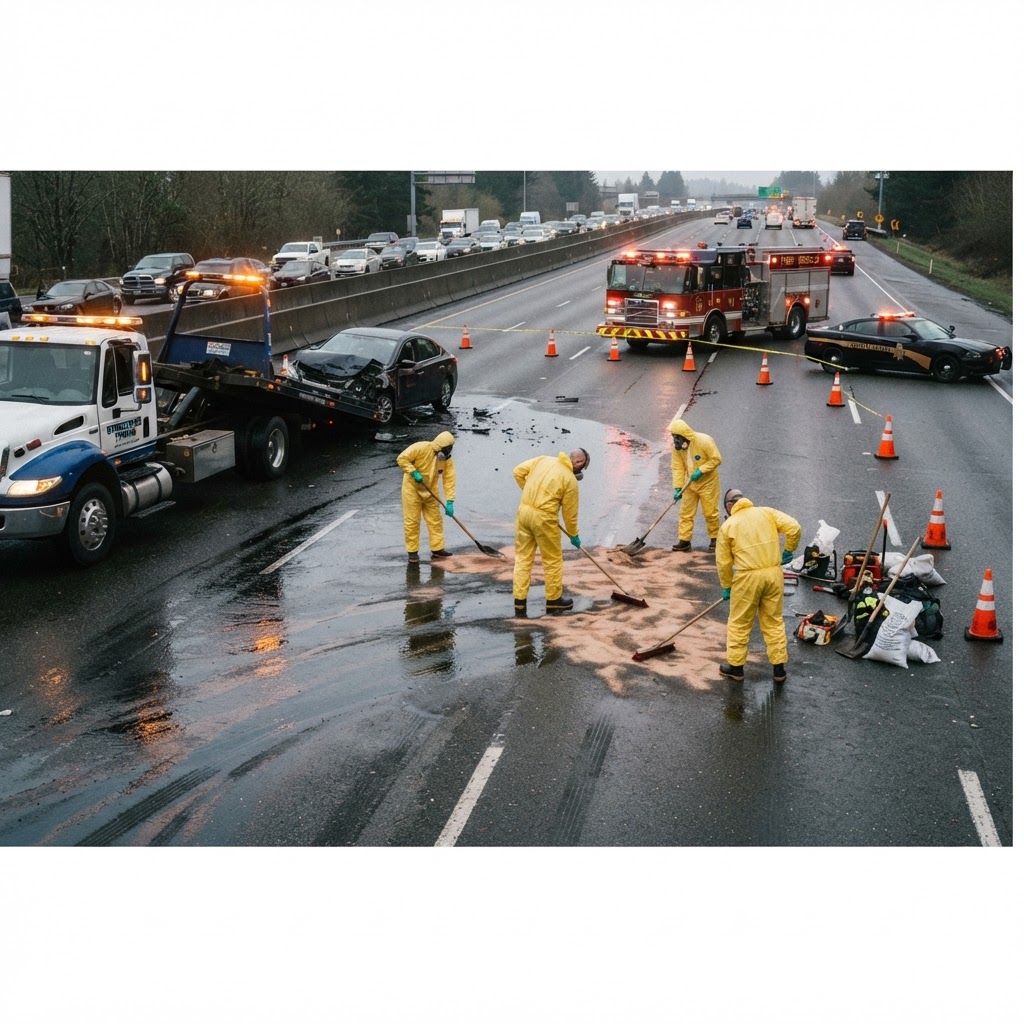
A motor-vehicle accident occurs, gasoline spills onto the roadway, and a towing company or hazardous-materials contractor performs the cleanup. Who is responsible for the bill?
The short answer is that the at-fault driver, and potentially the driver's liability insurance carrier, may ultimately be responsible for some or all of the cleanup costs, subject to available coverage and policy limits. The payment process, however, may not be as simple as a cleanup contractor submitting an invoice directly to the carrier and demanding payment.
First, a word of caution
In my experience, invoices submitted by hazardous-waste cleanup and environmental-remediation companies can be substantial and often warrant careful review. Carriers should closely examine the scope of work performed, the rates charged, the necessity of the services rendered, and the documentation supporting the invoice.
Additionally, some contractors pursue collection aggressively, including by retaining counsel or referring unpaid invoices to third-party collection agencies. If a carrier receives a formal demand, threat of litigation, or collection notice, it may be appropriate to consult in-house or outside counsel before responding.
Secondly, receipt of an invoice does not automatically create an obligation to pay
It is important to remember that the liability carrier generally did not hire the cleanup contractor, authorize the work, negotiate the contractor's rates, or agree to be responsible for the contractor's charges.
The contractor's decision to perform the work and the terms under which it did so may arise from an agreement with a towing company, property owner, governmental agency, law-enforcement agency, or another party. Accordingly, a carrier should not assume that receipt of an invoice, standing alone, establishes either the insured's liability for the charges or the carrier's obligation to pay them.
Instead, the contractor should be asked to identify the legal and factual basis upon which it seeks payment directly from the insured or the liability carrier.
With those preliminary considerations in mind, the next question becomes whether North Carolina law provides a statutory framework for payment and reimbursement of hazardous-substance cleanup costs.
North Carolina's statutory framework
North Carolina's Oil Pollution and Hazardous Substances Control Act generally prohibits the discharge of oil or other hazardous substances, including gasoline, onto land or water within the State. The Act contains limited exceptions, including circumstances involving acts of God, acts of war, or the negligence of third parties. See N.C. Gen. Stat. § 143-215.83 et seq.
When a state or local governmental agency participates in a hazardous-substance cleanup, North Carolina law establishes a process for submission and payment of cleanup costs. Generally, the participating agency may submit cleanup-related expenses to the North Carolina Department of Environmental Quality ("DEQ"). Those expenses may then be paid from the Oil or Other Hazardous Substances Pollution Protection Fund. See N.C. Gen. Stat. § 143-215.88.
It is important to recognize, however, that this statutory process may not apply to every cleanup invoice that arises following a motor-vehicle accident. In situations involving only private contractors, towing companies, or remediation firms, without participation by a governmental agency, the analysis may differ. In those circumstances, the contractor should be prepared to explain the contractual, statutory, or other legal basis upon which it contends direct payment is owed by the insured or the liability carrier.
The at-fault driver may still be responsible
Even where cleanup expenses are paid through the Protection Fund, that does not necessarily eliminate the responsibility of the person who caused the discharge. North Carolina law authorizes DEQ to pursue reimbursement from the person responsible for the spill. If reimbursement is not made voluntarily, the matter may be referred to the North Carolina Attorney General for the institution of an action to recover those costs.
Accordingly, payment by the State does not necessarily mean that the at-fault driver escapes liability. Rather, the statutory framework may simply change who is asserting the claim for reimbursement.
Practical considerations for liability carriers
When a liability carrier receives a cleanup invoice from a towing company, remediation contractor, hazardous-materials company, or similar service provider, the carrier should consider the following questions:
- Who requested, authorized, or directed the cleanup?
- Who contracted with the cleanup company?
- Did a state or local governmental agency participate in, direct, or supervise the cleanup?
- Has the invoice been submitted through any applicable statutory reimbursement process?
- What legal basis does the claimant contend supports direct recovery against the insured or the carrier?
- Is there an assignment, authorization, contract, lien, or other document supporting the demand?
- Were the services actually necessary?
- Are the quantities, labor charges, disposal fees, equipment charges, and rates adequately documented?
- Does the invoice contain charges that appear excessive, duplicative, or unsupported?
- Does the claim fall within available coverage and applicable property-damage limits?
The key distinction is often between the entity that performed the cleanup and the entity legally authorized to seek reimbursement from the responsible party. Depending upon the circumstances, the contractor, governmental agency, insured, and carrier may each have different rights and obligations. A thorough investigation at the outset can help avoid payment of unsupported charges while ensuring legitimate claims are handled appropriately.
Bottom line
A liability carrier should not automatically pay or deny a hazardous-waste or fuel-cleanup invoice merely because the expense arose from an automobile accident involving its insured. Receipt of an invoice alone does not establish that the insured is legally responsible for the charges, nor does it establish that the policy affords coverage for the claimed amount.
Instead, the carrier should determine who authorized the work, identify the legal basis for the demand, evaluate whether any statutory reimbursement process applies, scrutinize the necessity and reasonableness of the charges, and then assess coverage and available policy limits.
As with many claims issues, careful investigation and early legal analysis can be just as important as the amount reflected on the invoice.
Questions? Contact Steven Lucente with TLG Law at slucente@tlg-law.com or (704) 626-6552.
* This article is provided for general informational purposes only and does not constitute legal advice. Application of the law may vary depending on the facts, the policy language, and subsequent legal developments.