
When Does U.S. Trademark Law Stop at the Border? The Lanham Act After Abitron
How recent federal appellate decisions are reshaping the territorial boundaries of U.S. trademark law in an increasingly borderless digital marketplace.
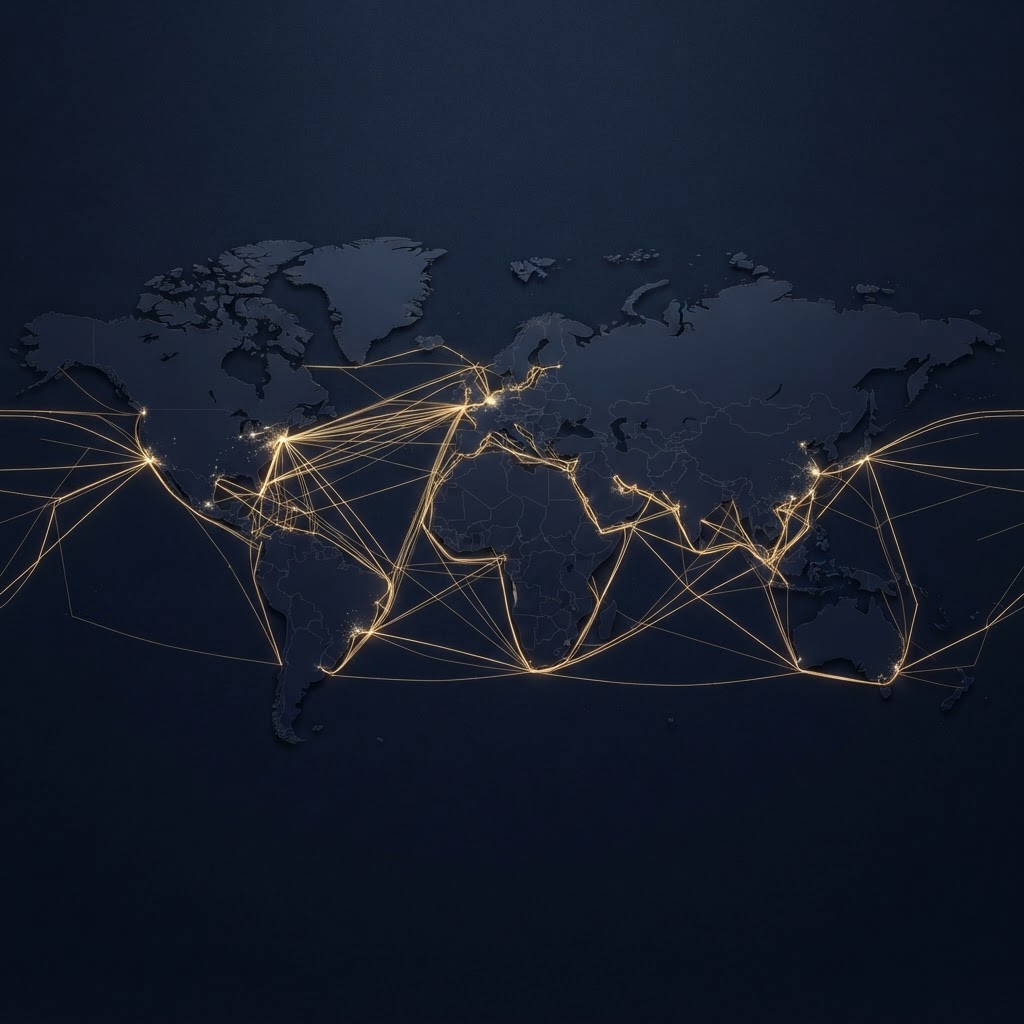
For a business operating online, national borders can be surprisingly difficult to identify. A website maintained in Europe may be viewed instantly in North Carolina. A product manufactured in California may be shipped exclusively to Hong Kong. A foreign company may advertise globally while accepting customers from the United States. And a trademark dispute arising from any of those activities may involve a mark registered in one country, a defendant located in another, and customers scattered across many more.
Trademark law, however, remains fundamentally territorial.
The tension between those two realities—global commerce and territorial trademark rights—has become increasingly important following the Supreme Court of the United States’s decision in Abitron Austria GmbH v. Hetronic International, Inc., 600 U.S. 412 (2023). More recent decisions from the federal courts of appeals, including the Fourth Circuit’s decision in dmarcian, Inc. v. DMARC Advisor BV, 182 F.4th 289 (4th Cir. 2026), have begun to define what Abitron means in practice.
The emerging rule sounds simple: the principal federal trademark infringement provisions of the Lanham Act apply only when the defendant engages in an infringing use in commerce within the United States. Determining where that “use” occurs, however, can be considerably more complicated.
Abitron Replaced an “Effects”-Based Inquiry With a “Conduct”-Based One
Before Abitron, federal courts had developed several different approaches for determining when the Lanham Act could reach conduct occurring outside the United States. Some courts placed substantial weight on whether foreign infringement produced significant effects on American commerce.
Abitron largely displaced that framework.
That case involved an American manufacturer of radio remote controls and foreign distributors that had once been authorized to sell its products. After the relationship deteriorated, the foreign companies continued using the American company’s trademarks. A jury awarded approximately $96 million in damages, much of it attributable to foreign sales.
In Abitron, The Supreme Court of the United States held that two central infringement provisions of the Lanham Act—15 U.S.C. §§ 1114(1)(a) and 1125(a)(1)—do not apply extraterritorially. Instead, liability depends upon whether the infringing “use in commerce” actually occurred domestically. As the Court put it, use in commerce supplies the “dividing line” between a permissible domestic application of the statute and an impermissible foreign one.
That distinction changed the question courts must ask.
It is no longer enough to argue simply that overseas infringement injured an American trademark owner, diverted revenue from an American business, or even generated confusion that eventually affected customers or a business located in the United States. The location of the defendant’s relevant commercial conduct matters.
But Abitron left an important question unresolved, especially in the modern era: What, precisely, qualifies as a domestic “use in commerce”?
Recent cases demonstrate why that question matters.
A Product Can Be in U.S. Commerce Without Ever Being Sold to a U.S. Consumer
The Ninth Circuit confronted one version of the problem in Doctor’s Best, Inc. v. Nature’s Way Products, LLC, 143 F.4th 1101 (9th Cir. 2025).
Doctor’s Best manufactured nutritional supplements bearing the mark NATURE’S DAY in California but marketed and sold those products only overseas. Nature’s Way, owner of the NATURE’S WAY trademarks, alleged trademark infringement.
There were no domestic sales of the challenged products by Doctor’s Best. Nevertheless, the Ninth Circuit concluded that transporting the marked products within the United States on their way to foreign markets constituted a domestic “use in commerce” such that Doctor’s Best could be liable for trademark infringement. The Lanham Act expressly provides, in one definition of trademark use, that a mark may be used in commerce when it is placed on goods and the goods are “sold or transported in commerce.”
That did not mean Nature’s Way won.
The court then turned to the other indispensable element of a trademark infringement claim: likelihood of confusion. Because the NATURE’S DAY products were not advertised or sold to American consumers, the court found insufficient evidence that the domestic transportation of the products was likely to confuse consumers in the United States. Summary judgment in favor of Doctor’s Best was affirmed by the Ninth Circuit.
The result illustrates an important distinction. After Abitron, identifying some domestic activity involving a trademark does not automatically create infringement liability. The domestic activity still must amount to an offending trademark use—one that satisfies the traditional elements of an infringement claim, including a likelihood of confusion.
The Fourth Circuit Confronts the Internet Problem
The Fourth Circuit approached the question from a different angle in dmarcian, Inc. v. DMARC Advisor BV.
The dispute in dmarcian arose between a North Carolina-based software company and a Dutch company. Among other allegations, the American company contended that its former foreign affiliate had adopted its brand identity, operated a nearly identical website, and competed for the same customers.
Importantly, the Fourth Circuit rejected the proposition that merely maintaining a website accessible from the United States necessarily constitutes domestic trademark use. That rule would potentially subject almost every commercial website in the world to the United States’s federal Lanham Act simply because an American user could open it.
The facts in dmarcian, however, went considerably further.
The foreign company’s website included functionality directed toward customers in “the Americas”; the company affirmatively communicated with American customers; and at least one American customer switched providers. The Fourth Circuit concluded that those activities constituted marketing, advertising, and sales activity in the United States.
The court drew a useful distinction between mere accessibility and active targeting. A passive foreign website that happens to be viewable in the United States would typically remain outside the purview of the Lanham Act. A foreign business that deliberately uses a challenged mark to solicit, communicate with, or transact with American customers, however, stands on much different footing.
That distinction is likely to become increasingly important for e-commerce companies, software providers, subscription businesses, and other enterprises whose commercial activity cannot easily be attributed to any particular geographic location.
An Emerging Question: What Does “Use in Commerce” Actually Mean in the Ever-Developing Internet Age?
The recent cases also expose a more technical—and potentially consequential—doctrinal question.
The Ninth Circuit in Doctor’s Best relied upon the Lanham Act’s statutory definition in 15 U.S.C. § 1127, under which a mark placed on goods may count as “used in commerce” when those goods are sold or transported in commerce.
The Fourth Circuit in dmarcian, however, emphasized that an infringement action presents a somewhat different inquiry. Citing its earlier precedent, the court explained that “use in commerce” in an infringement case refers to use in commerce in the constitutional sense, while § 1127’s more technical definition traditionally plays a greater role in determining whether a trademark owner has made sufficient use to acquire or register rights. The Fourth Circuit therefore looked to sales, advertising, marketing, and distribution directed toward the United States.
That distinction may sound academic, and indeed it may be, but its consequences are practical.
Suppose a foreign company places another business’s trademark on a product overseas and then advertises the product directly to American purchasers. Or suppose an American company labels products domestically but exports every unit to customers abroad. Or consider a cloud-based service whose servers, employees, customers, advertisements, and payment processors are located in different countries.
In each scenario, identifying the geographical location of the relevant “use” can be difficult. After Abitron, that characterization may determine whether a federal trademark infringement claim exists at all.
The Internet Does Not Eliminate Territoriality
One lesson from these cases is particularly important: operating a business on the internet does not make trademark law borderless.
A foreign business does not necessarily become subject to U.S. trademark law merely because Americans can see its website. Conversely, a company cannot necessarily avoid U.S. trademark liability simply by locating its headquarters or servers overseas while deliberately soliciting American customers.
As the internet continues to become even more ubiquitous across the globe, the necessary inquiry has become increasingly fact-specific.
Among the considerations likely to matter are:
- Whether the accused business actually sells goods or services to customers located in the United States;
- Whether advertising is specifically directed toward American consumers;
- Whether a website includes U.S.-specific pages, pricing, shipping options, contact information, or any other evidence of geographic targeting;
- Whether marked products are manufactured, labeled, distributed, or transported within the United States;
- Whether the alleged infringement involves domestic consumers and a domestic likelihood of confusion; and
- Which particular acts form the basis for the damages or injunctive relief being requested.
Those facts should be considered not only after litigation begins, but when businesses design their international trademark and e-commerce strategies.
Remedies Present a Separate Problem
Even when some actionable domestic infringement exists, another question remains: How far may the remedy extend?
Abitron makes clear that purely foreign conduct does not become actionable merely because it harms an American trademark owner. That principle can affect not only liability, but also damages calculations and requests for injunctions.
Courts therefore must distinguish between an order designed to stop domestic infringement and one that effectively regulates trademark use throughout the world.
The Fourth Circuit’s decision in dmarcian illustrates this difficulty.
In dmarcian, the court upheld preliminary restrictions designed to prevent the defendant’s trademark use from reaching U.S. internet users, reasoning that an injunction need not be drafted so narrowly that a defendant can simply alter the mechanics of its infringement while continuing to reach the same American market. At the same time, the court reaffirmed that the Lanham Act prohibits only domestic infringement.
That tension—between territorially limited substantive rights and remedies broad enough to stop technologically borderless conduct—is unlikely to disappear, even if the goal is to find some way to eliminate or narrow it.
What Businesses Should Take From the Developing Law
For companies doing business internationally, Abitron does not mean that conduct outside the United States is categorically safe from U.S. trademark litigation, nor does it mean that every international dispute involving an American trademark belongs in an American court.
Instead, the focus has shifted toward what the accused party actually did in the United States.
For trademark owners, that makes evidence of domestic sales, marketing, customer communications, distribution, transportation, and digital targeting more important than ever. A plaintiff investigating a potential international infringement dispute should identify the relevant domestic conduct early rather than relying principally on the economic effects of conduct abroad.
For businesses accused of infringement, geography can now be a substantive component of the defense. Separating genuinely domestic conduct from foreign sales and foreign marketing can materially affect liability, damages, and the permissible scope of an injunction.
For companies planning international expansion, trademark clearance should increasingly be viewed on a country-by-country basis. A federal registration in the United States remains enormously valuable, but it is not a worldwide trademark right. Businesses with meaningful foreign markets should consider whether protection in those foreign jurisdictions is necessary before a dispute arises.
A Territorial Doctrine for a Borderless Marketplace
Abitron reaffirmed a traditional principle at an unusually modern moment: trademark rights in the United States remain territorial even as commerce is increasingly and more easily globalized.
Manufacturing in one country, transportation through another, advertisements visible everywhere, cloud-based services delivered remotely and often managed by service teams working across the world, and transactions consummated electronically all complicate the seemingly straightforward question of where a trademark is being “used.”
The Fourth Circuit’s decision in dmarcian provides an important guideline, particularly for businesses in the Carolinas and the Virginias: mere internet accessibility is not the same thing as domestic “use in commerce” of a trademark, but purposeful commercial activity directed at American customers generally will be so considered.
As courts continue applying Abitron to increasingly borderless forms of commerce, the factual distinction between being visible in the United States and doing business in the United States may become one of the most consequential lines to draw in modern trademark law.
Disclaimer
This article is intended for general informational purposes only and does not constitute legal advice. Trademark rights and disputes require highly fact-specific inquiries. If you have any questions, please feel free to reach out via our “Contact” page!